
Many people find themselves stuck in grief because they are never able to let go of what they believed was “supposed to be.” This is the challenge behind acceptance.

Continuing Bonds: Your Evolving Relationship with Someone Who Died
The grief theory of Continuing Bonds acknowledges that your relationship with the deceased has changed dramatically but will evolve into something new.

Secondary Losses
Secondary losses can be numerous and can make it feel like grief is piling up on you. This is the place where people, if they’re going to get stuck, usually get stuck

A Year-long Look at Healing
Happiness isn’t a spontaneous state of being, it’s a practice. And though it may have come easily in the past, if you’re now experiencing grief, you may find that for the first time you really have to work at getting to joy and happiness.

Mindfulness & Grief: Meditation and Journaling
Mindfulness expert, Heather Stang, is going to teach you two valuable practices, Mindfulness Meditation: Breath Awareness and Mindful Journaling.
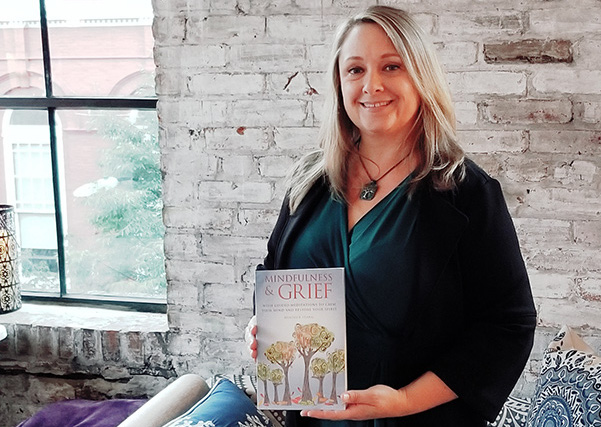
Mindfulness and Grief with Heather Stang
If you’re interested in incorporating mindfulness practice into your daily life, this is a perfect beginners guide for grief and mindfulness.

RAIN: Easy Mindfulness for Grief
The RAIN method of mindfulness, is useful in grief for examining, and better understanding, what you’re feeling rather than just having those feelings take over.

Meaning-Making After Loss
Meaning-making can take you from a place where all you see is the bad that comes from loss to a place where you can start to see the “good.”

The Existential Crisis of Grief
In the last article we addressed the question of why. Which is a massive question. Why did they die? Why him? Why her? The other side of that coin is why not him? Why not her? Why not me?

Why Did They Die?
In the context of grief, the question of “why” can be one of the most infuriating thoughts that you come back to again and again. Discover the 3 challenges of “why” and how to face them.

Are These Thoughts REALLY True?
This exercise isn’t meant to determine if a thought is good or bad just whether the thought is true and if it is useful.

Four Tasks of Mourning
Grief theory can’t explain everything, but it may bring some insight you can relate to or otherwise shed some light on your grief experience.

Grief Theory: Dual Process Model
The key idea around the Dual Process Model is that we don’t go one way through grief—following stages or tasks in a sequence over time—but instead that we oscillate (or bounce back and forth) between being “loss-oriented” and “restoration-oriented.”

Who Am I Without Them?
Instead of using SWOT for a project we’re applying it to your life after loss to get an idea of where you’re at, and if you’re up for it, where you want to go.

You’re Not “Going Crazy”
grief can definitely make you feel like you’re losing touch with the normal reality you knew, which can be incredibly disorienting.